The problem with surface composters
When compost attracts rodents
Traditional composters — often made of plastic or wood — are installed on the surface.
Leftover food, peelings and cores accumulate there, naturally giving off an odor that attracts surrounding wildlife.
For rats, voles or mice, these composters are a veritable larder :
- easy to access,
- protected from predators,
- sometimes heated naturally by fermentation.
As a result, many users end up stopping composting, put off by the presence of rodents.
A system poorly adapted to living things
Beyond the pest problem, surface composting suffers from another defect:
It disrupts the natural cycle of organic matter, which should return to the soil, not pile up on top.
Burying compost: a simple but revolutionary idea
The principle of the buried worm composter is inspired by the functioning of natural soils:
Microorganisms and worms decompose organic matter directly in the soil, where it is transformed into humus and nutrients available for plants.
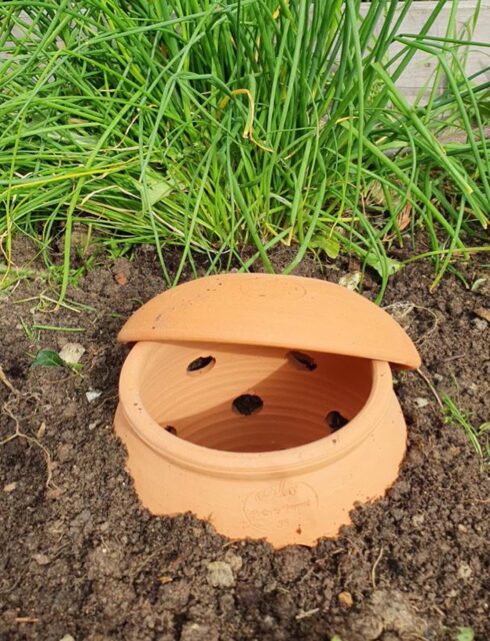
How does it work?
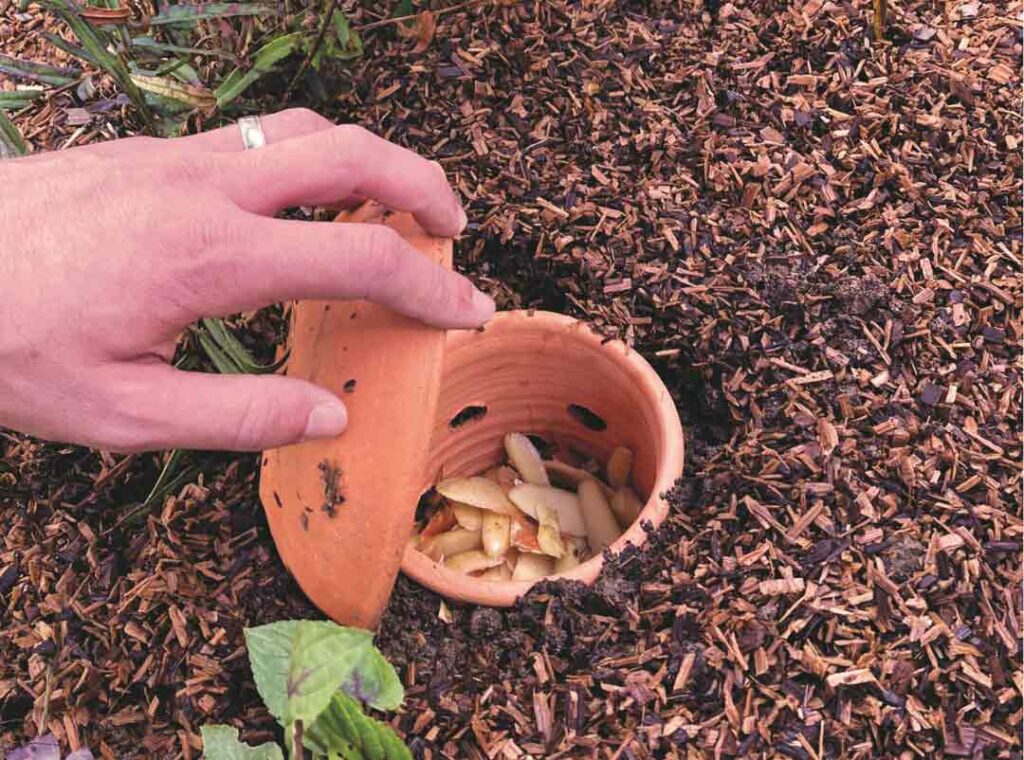
- The worm composter is planted in the ground, in the middle of the vegetable garden or a flower bed.
- Everyday biowaste is deposited there: peelings, coffee grounds, eggshells, etc.
- Worms and bacteria take care of the rest.
Everything is done in a closed circuit, without odor, without leakage, and above all without any possible access for rats.
Why ceramics change everything
At Poterie Jamet, our underground composters are made of natural ceramic.
This traditional material, used for centuries to store, breathe and filter, offers several advantages:
A natural barrier against pests
- Ceramic is impervious to rodents, unlike wood or plastic.
- The composter is buried, so there are no openings accessible from the surface.
- The smells remain confined underground: nothing attracts the animals.
Slow and efficient breathing
- The microporous material allows microorganisms to breathe.
- Decomposition occurs naturally, without excessive fermentation.
- The surrounding soil remains alive and balanced.
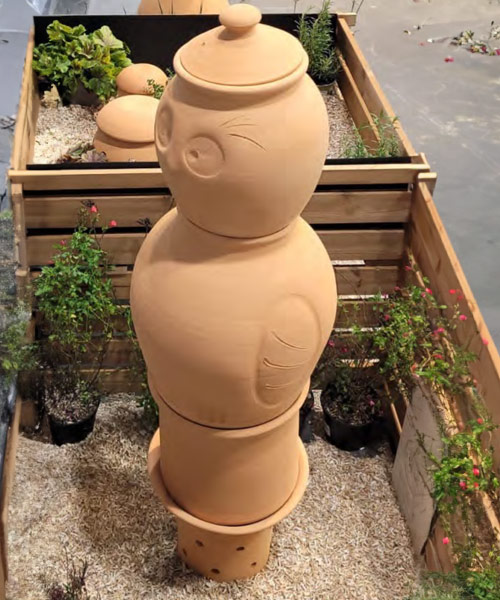
Composting and soil life: a virtuous circle
By using an underground worm composter, you feed the soil directly, without handling or transfer.
The nutrients diffuse slowly into the soil, stimulate the underground fauna and enhance natural fertility.
Concrete benefits:
- no more rodents, no more smells,
- a richer and looser soil,
- a simple and sustainable zero waste approach.
Common sense restored
Underground composting requires neither technology nor complex maintenance.
It is simply a matter of giving nature back the place it deserves.
And because our pottery is designed to last, it fits perfectly into an ecological and responsible gardening approach.
Composting without attracting rats is possible.
With Jamet pottery, decomposition takes place underground, where soil life begins.